
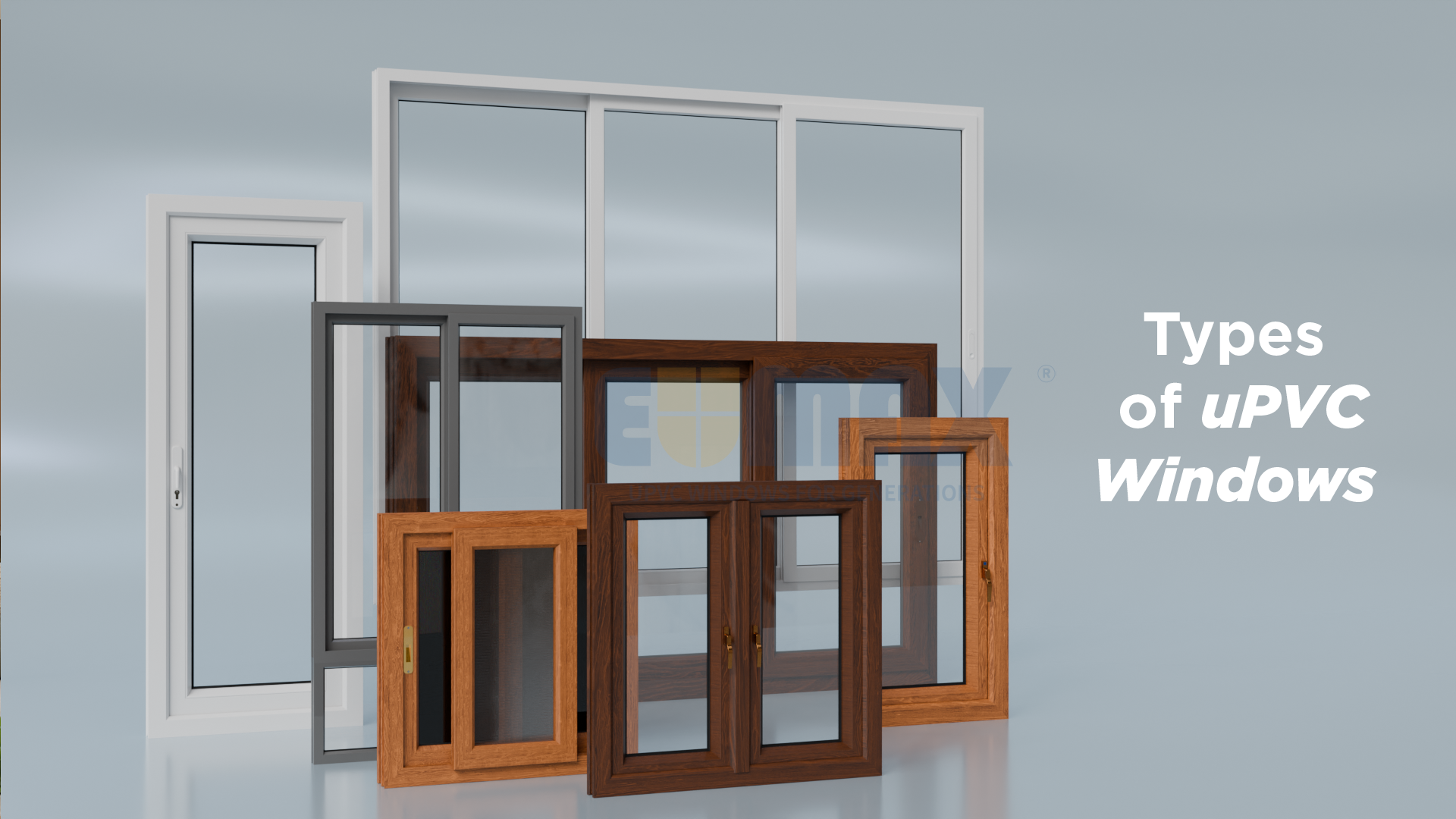
Window "style" gets used to mean two different things — how a window opens, and how it looks. The first determines the second far more than most people expect, so it is the better place to start.
This is a plain guide to the window types available in uPVC and what each one is actually for.
Sliding windows
Sashes run on horizontal tracks, sliding past one another. Nothing swings, so no floor or wall space is consumed on either side.
A two-track window opens to half its width; three-track to about two-thirds. That limitation is the main trade-off against the space saving.
Suits: bedrooms, living rooms, balcony access, and any position where swing space is tight — which in an apartment is most of them.
Available in: 50mm through 108mm series, matched to the span.
A note on terminology: sliding windows are sometimes confused with sash windows. They are different products. A sash window slides vertically in a fixed frame and is a traditional British type; a sliding window slides horizontally. Eumax makes horizontal sliding windows.
Casement windows
Hinged at the side, swinging open like a door, closing against a compressed gasket running the full perimeter.
The seal is the reason to choose them. A compressed gasket is substantially more airtight than the brush strip a sliding sash uses, which means better performance against noise, dust and air-conditioning load. They also open to their full aperture rather than half.
Against that: they need clear swing space, and they cost more.
Suits: road-facing rooms, air-conditioned rooms, dusty elevations, anywhere natural ventilation is the priority and there is room for the sash to move.
Available in: the 60mm casement series.
Fixed windows
Glazing in a frame with no opening section at all.
Frequently treated as the cheap option when it is often the right one. With no tracks, rollers, hardware or moving seal, a fixed pane is the cheapest per square foot, the best sealed, and gives the slimmest sightline.
Where an opening exists to bring in light rather than air, this is simply the correct answer. The only real question is external cleaning access on upper floors.
Suits: stairwells, high-level openings, picture windows, and any position where a view or daylight is wanted without ventilation.
Combination windows
A single frame holding more than one panel type — typically fixed glazing alongside opening sashes.
This is usually the right answer for a wide opening. You get daylight across the full width while paying to make operable only the part somebody will actually reach and use.
Suits: wide living room openings, balcony walls, anywhere the opening is larger than the ventilation requirement.
Watch: the mullions and transoms between panels carry real structural load on a wide unit. Confirm reinforcement covers them, not just the outer frame.
Bay windows
A window arrangement projecting outward from the wall line, formed from several panels set at angles to one another.
Bay windows do two things: they add floor area to the room, and they gather light from three directions rather than one. Both are genuine, and both come at the cost of a more complex structural arrangement — the projecting frame needs proper support, and the corner posts do real work.
Suits: living rooms and bedrooms in independent houses, particularly where a window seat or additional depth is wanted.
Watch: this is the configuration where installation quality matters most. A bay arrangement that is not properly supported and sealed at the junctions will show it.
Choosing between them
Rather than picking a style you like, work through four questions per opening.
Does this opening need to open at all?
If it exists for light or a view, a fixed panel is cheaper, better sealed and slimmer. Be honest — a window nobody opens is a fixed window with unnecessary hardware.
Is there swing space?
Inward-opening casements conflict with curtains and furniture; outward-opening ones conflict with balcony railings and narrow passages. Check on site. If there is no room, sliding is the answer regardless of the sealing advantage.
What is the room's dominant problem?
Noise, dust or cooling cost point to casement. Space constraint points to sliding. Neither points to fixed.
How wide is the opening?
Beyond a certain width a single sash becomes unwieldy. Wide openings want a combination unit or a multi-track sliding arrangement, and both want a deeper profile series.
Mixing types is normal
A common instinct is to use one window type throughout for consistency. It is usually the wrong instinct.
A house where every opening is sliding will have under-sealed road-facing bedrooms. A house where every opening is casement will have sashes swinging into furniture in rooms that never needed them.
What creates visual coherence is not a single window type — it is a consistent finish, consistent sightline proportions and consistent glazing. A facade with sliding, casement and fixed windows all in the same Metallic Grey laminate reads as designed. One with a single type in three different finishes does not.
The short version
Fixed where you want light. Casement where you want a seal. Sliding where you want space. Combination where the opening is wider than the ventilation need. Bay where you want the room to gain depth.
Choose per opening, keep the finish consistent, and the result will look considered rather than compromised.
Frequently asked questions
Are sliding windows the same as sash windows?
No, they are different products. A sash window slides vertically within a fixed frame and is a traditional British type. A sliding window slides horizontally on tracks. Eumax manufactures horizontal sliding windows.
Should the same window type be used throughout a house?
Usually not. A house entirely in sliding windows will have under-sealed road-facing bedrooms; one entirely in casement will have sashes swinging into furniture in rooms that never needed them. Visual coherence comes from consistent finish and sightline proportions, not from a single window type.
When should a window be fixed rather than opening?
Whenever the opening exists for light or a view rather than ventilation. A fixed pane has no tracks, rollers or moving seal, so it is the cheapest per square foot, the best sealed and the slimmest. The main consideration is external cleaning access on upper floors.
Want a quote for your own openings?
Our team covers Bengaluru and surrounding areas.


